Blog
Insights
Why Knowledge Graphs Are the Missing Piece of Your AI Strategy
Discover why Knowledge Graphs are the critical infrastructure missing from modern AI. Learn how moving beyond unstructured data to a "digital library" approach turns generic AI summaries into trusted business intelligence.
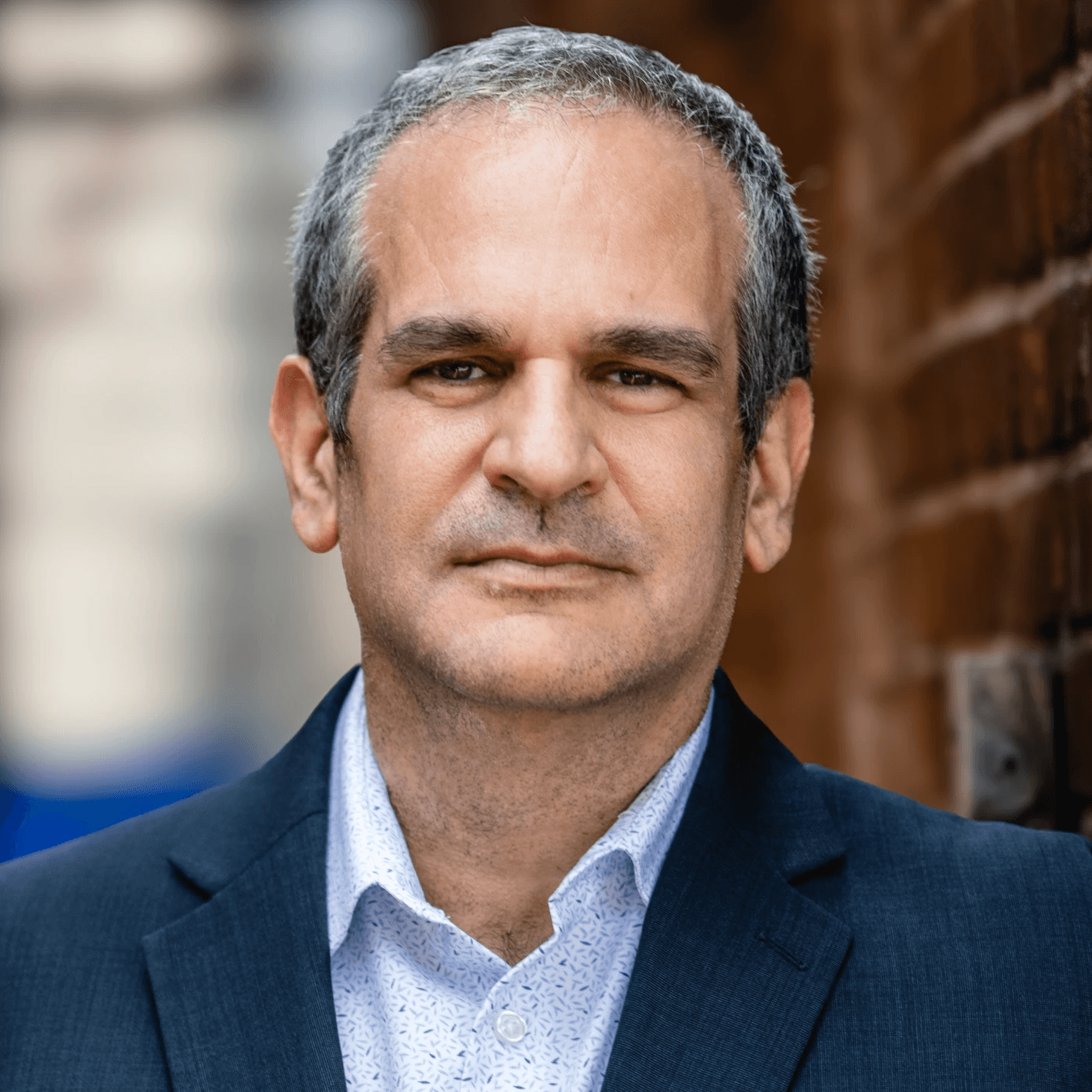
Malcolm De Leo
CBO

The Nostalgia of the Card Catalog
Do you remember the pre-Google days? Back when "doing research" meant physically wrestling with the Dewey Decimal System? We didn’t just search for information. We hunted it. We wandered the stacks, pulling books, checking indices, and piecing together knowledge like a jigsaw puzzle. It was slow. It was inefficient. However, it was also kind of beautiful.
The process was the point. You didn't just stumble onto answers. You earned them. Every dead end and annotated margin built your critical thinking muscle.
But if you watched enough Star Trek growing up, you probably dreamed of the alternative. You know the one: The Computer. You ask a question, and it instantly curates the sum of human knowledge into a perfect answer. That vision of an educational utopia where insight is instant has always stuck with me.
Today, thanks to AI, we are inching toward that future. But if we are being honest, we aren't quite there yet.
The "Uncanny Valley" of Insight
Let’s face it. We have all been a little drunk on the promise of generative AI. When ChatGPT first arrived, it felt like the future had landed. You asked a question, and it gave you a confident, sometimes even poetic, answer.
But as the initial high wore off, the hangover set in. We started noticing the cracks. The answers were often surface-level. The data was a "black box" because we didn't know where it came from. The insights felt stitched together. They were convincing but often shallow.
We are currently stuck in the "uncanny valley" of research. We want AI to be a digital oracle that is precise, deep, and reliable. Instead, we have a very impressive improv artist. We have the glam, but we are missing the guts.
Enter the Knowledge Graph (The Adult in the Room)
So, how do we fix this? We need to stop treating AI like a magic trick and start treating it like a library.
Imagine a digital library so vast it makes the Library of Congress look like a roadside book swap. But instead of static books on shelves, this library is a living network of data nodes. It connects companies, people, locations, and events into one massive web.
This is a Knowledge Graph.
Instead of wandering the stacks, you can walk up to this system and ask it to show you every chicken farm in Nebraska or pull every article on drone tech in aerospace from the last five years.
You aren't just Googling. You are curating. You are building your own private section of the library on demand.
When you layer your favorite AI model on top of this structure, the game changes. The AI isn't hallucinating an answer from the entire messy internet. It is crafting a summary, a report, or a strategy based solely on the clean, scoped, and interconnected data you gave it.
Why Structure Matters
The problem with modern AI isn't the models. It is the data.
Right now, most of us are still in the "duct tape" era of data management. We scrape websites, stitch together spreadsheets, and hope for the best. It is manual, messy, and fragile.
Knowledge graphs are the infrastructure we’ve been missing. They are the connective tissue that lets AI stop guessing and start understanding. They link people to places, places to companies, and companies to news events.
At GraphIQ, we decided to stop waiting for this to exist and built it ourselves. We created one of the world’s largest living business knowledge graphs. It contains 280 million companies, nearly a billion people, and almost a billion news articles, all woven into a single fabric.
A Real-World Scenario: The Conference Prep
Let’s bring this down to earth. How does this actually change your Tuesday morning?
Imagine you are heading to a massive industry conference. The event website lists 500 attending companies. You have one day on the floor and limited time to make an impact.
The Old Way You squint at the exhibitor map, open 50 tabs on your browser, skim a few "About Us" pages, and eventually give up and trust your gut.
The Knowledge Graph Way
You take that list of 500 companies.
You drop it into a system powered by a Knowledge Graph.
In seconds, the system enriches every single name.
Suddenly, you aren't looking at a list of names. You are looking at a dashboard showing funding history, recent news, key executives, global locations, and hidden connections.
Then, your boss pings you to say she needs to meet with Acme Corp in 10 minutes and needs a briefing.
Instead of panic-Googling, you click a button. The AI reads the structured data from the graph and generates a clean, sourced, and accurate summary. You look like a genius, and the prep took five minutes.
The Library Didn’t Die. It Just Went Digital.
We aren't replacing research. We are supercharging it. The future of knowledge isn't just about search bars and chatbots. It is about curation.
The library never died. It just went digital. And with the right structure behind it, it is finally ready for you to check something out.
Malcolm De Leo
CBO
Share