Blog
Insights
The Quiet Power of Knowledge Graphs: Why AI’s Unsung Hero Deserves a Closer Look
Discover why Knowledge Graphs are the missing link in the AI ecosystem. Learn how structured data solves LLM hallucinations, why "boring" infrastructure is the future of tech, and how GraphIQ is building the world's largest living business map.

Malcolm De Leo
CBO

If you have spent any time in the tech industry, you know the archetype. It is the brilliant data scientist who corners you at a mixer to talk endlessly about a new theoretical model that will revolutionize human existence. They aren't wrong, necessarily. However, they are often stuck in what I call the "basement loop," building elegant, complex architectures that never actually see the light of day.
Meanwhile, the tool that actually makes AI useful is sitting on the shelf like a dusty encyclopedia.
It is called the Knowledge Graph. It isn't flashy, it doesn't write poetry like ChatGPT, and it doesn't generate psychedelic art like Midjourney. Yet it is the missing piece of the puzzle.
So, what is it?
Let’s skip the academic definition about nodes and edges.
Think of a spreadsheet. It stores data in rows and columns. It is rigid. Now, tear that spreadsheet up and turn it into a spiderweb. A knowledge graph doesn't just store data; it stores meaning.
It knows that "Apple" is a fruit in a recipe but a tech giant in a stock report. It maps relationships, such as how Company A acquired Company B, which is being sued by Person C, who sits on the board of Company A.
This isn't hypothetical. At GraphIQ, we have built the world’s largest living business graph. We aren't just listing companies; we are tracking the pulse of 280 million businesses, 954 million people, and half a billion locations. We ingest nearly a billion news articles to stitch together a map of the global economy that updates in real time.
It is the difference between having a phone book and having a private investigator who knows everyone in town.
Why haven't they caught on?
If this technology is so powerful, why isn't it on every magazine cover?
To put it bluntly, it is not sexy.
Building a knowledge graph is the digital equivalent of plumbing. It requires messy, upfront work. You have to clean data, define the rules of your world, and maintain semantic integrity. It doesn't give you that instant "wow" factor of a generative AI demo. Instead, it provides cumulative value, much like compound interest, which is a hard sell in a market addicted to quarterly quick wins.
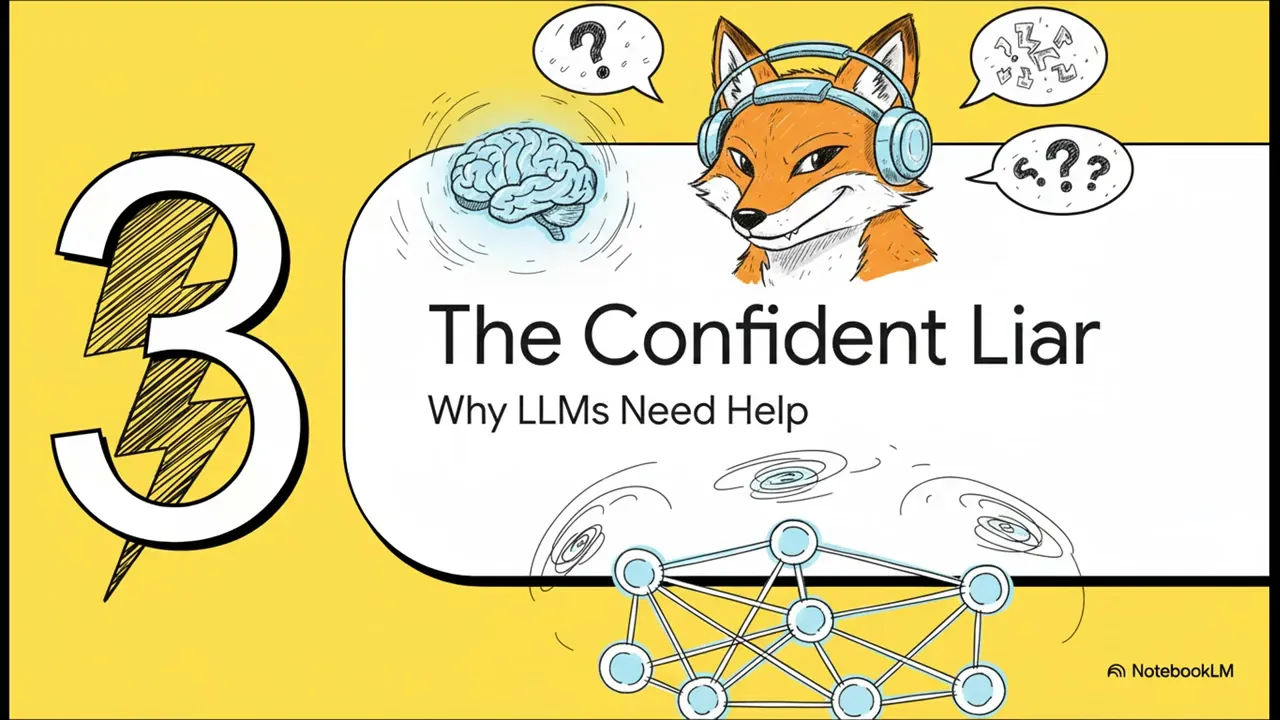
The Plot Twist: Why LLMs Need Help
Here is the irony. The very thing that overshadowed knowledge graphs, the Generative AI boom, is exactly what is going to save them.
We have all realized by now that Large Language Models (LLMs) are incredible, but they are also confident liars. They hallucinate. They don't "know" facts because they just predict the next likely word in a sentence.
This is where the knowledge graph steps out of the shadows.
If you want an AI that doesn't make things up, you need to ground it in truth. The knowledge graph acts as the structured memory for the AI. It bridges the gap between sounding smart and being right.
The LLM provides the language.
The Knowledge Graph provides the facts.
This combination is the only way we get to the next phase of technology, which is AI that can be trusted with actual business decisions.
The Bottom Line
We are done with the "magic trick" phase of AI. We are moving into the utility phase.
GraphIQ is built on the premise that the future belongs to those who can curate and connect their data, not just those with the biggest chatbot. We are building the new digital library where users don't just search for keywords but uncover the hidden connections that drive the world.
So while the rest of the world chases the next shiny object, we will be over here fixing the plumbing. Eventually, everyone is going to need a glass of water.
Malcolm De Leo
CBO
Share